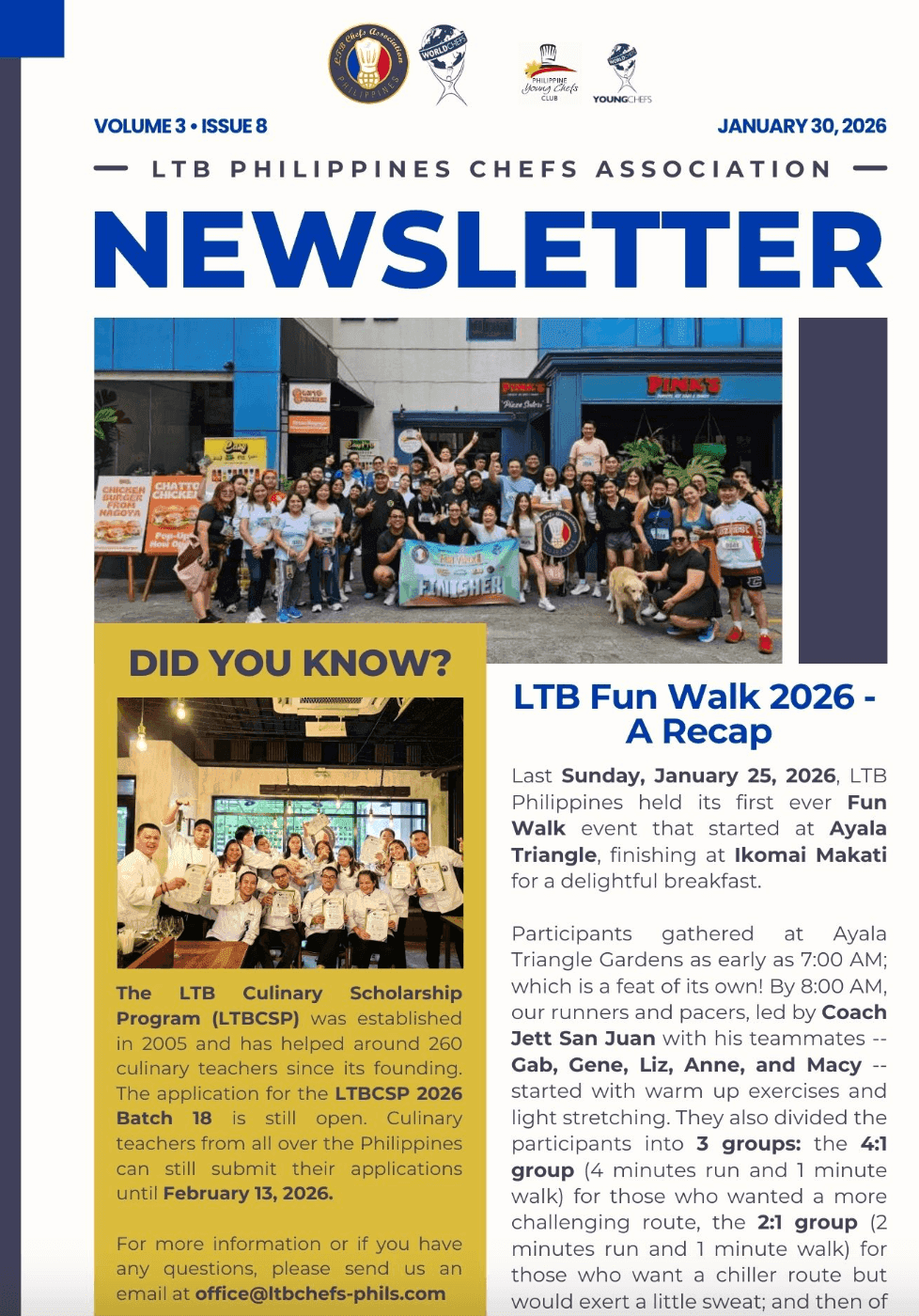
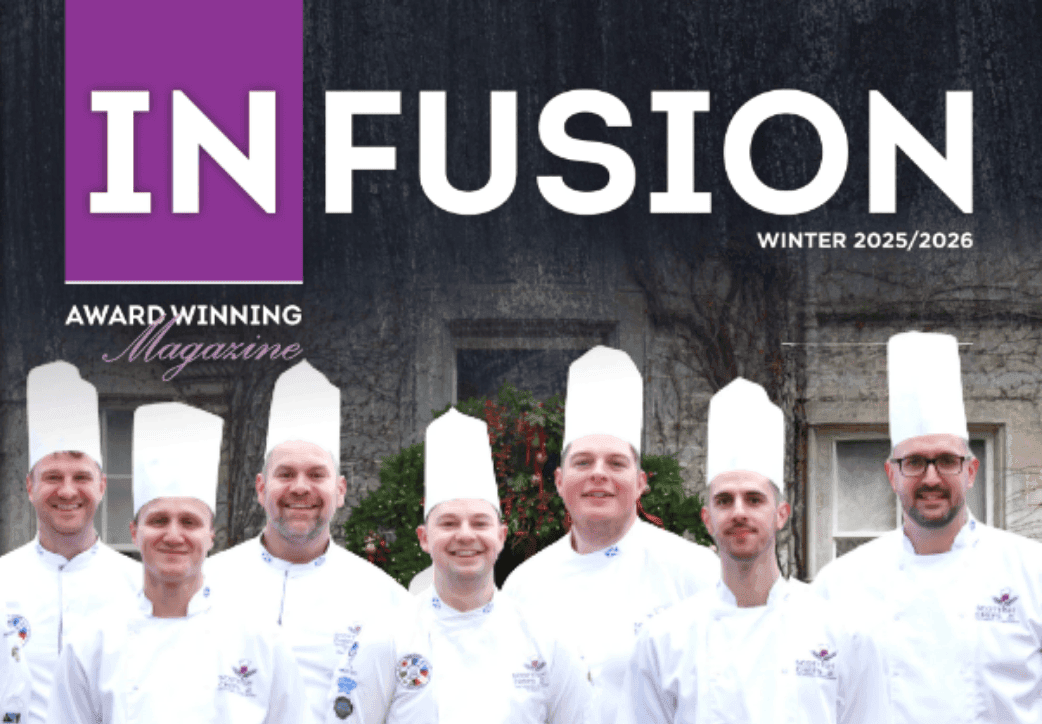
In the latest issue (Vol. 3 Issue 8) of LTB Philippines Chefs Association Newsletter, explore updates from the LTB Fun Walk, discover their upcoming events, and more!
To learn more about Worldchefs, click here.
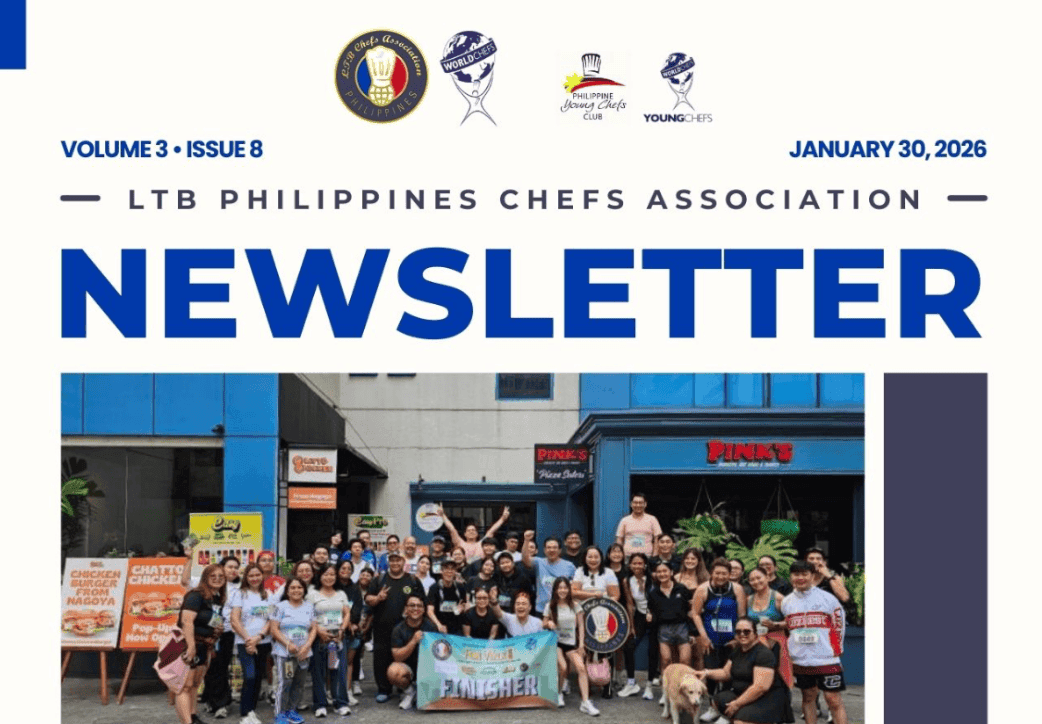
In the latest issue (Vol. 3 Issue 8) of LTB Philippines Chefs Association Newsletter, explore updates from the LTB Fun Walk, discover their upcoming events, and more!
To learn more about Worldchefs, click here.
Empowering citizens to accelerate climate action and behavioral change in EU food systems
Food shapes our health, our environment, and our communities. Yet the way we produce and consume it takes a toll on the planet – responsible for over a quarter of global greenhouse gas emissions, a big part of the world’s freshwater use, and growing pressure on land and ecosystems. At the same time, rising overconsumption, diets high in animal-based foods, and large-scale food waste undermine both climate goals and public health.
Across Europe, people increasingly want to eat in a way that benefits both their well-being and the planet. What often stands in their way is not intention but practical guidance: knowing what to change, how to do it, and where to start.
FoodChoices4LIFE bridges that gap by launching Europe-wide campaigns that empower people to eat healthier, live sustainably, and waste less at home. From concrete tips to hands-on events, you will find practical, science-backed ideas for everyday use.
Alongside the campaigns, FoodChoices4LIFE will train over 500 chefs, 60 journalists, and 40 local policymakers, strengthening skills and empowering communities to lead the shift towards healthy and sustainable diets. Citizens will also be able to try a new AI-powered app that helps them choose climate-smart meals and cut food waste, supporting healthier lives and a healthier planet – without compromising taste or tradition.
FoodChoices4LIFe continues the legacy of successful EU LIFE initiatives – Su-Eatable Life and Climate Smart Chefs – aligning with the EU Green Deal, Farm to Fork Strategy, Food 2030 Policy Framework, and European Climate Pact. By connecting evidence from nutrition, behavioural science, and environmental research, the project accelerates Europe’s shift toward diets that are both healthy and climate-smart.
Our advisory group is formed by leading experts in food systems and sustainability to ensure the project’s actions are relevant, evidence-based, and impactful.
To learn more about the FoodChoices4LIFE Infoweeks, taking place in October 2026 and 2027, click here.
For more information or collaboration opportunities, click here.
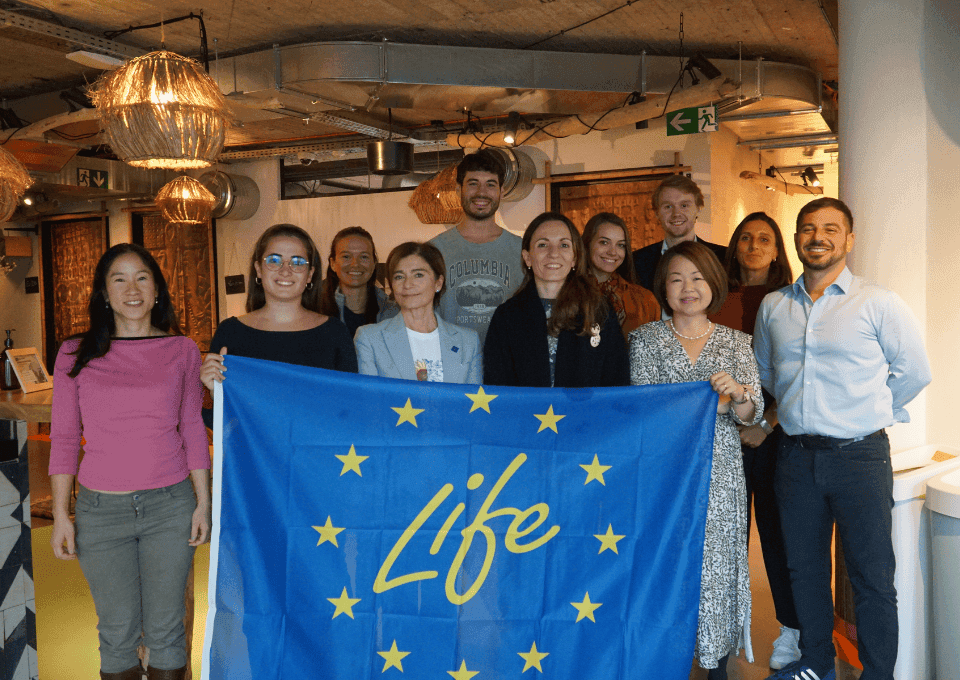
Co-funded by the European Union. Views and opinions expressed are however those of the author(s) only and do not necessarily reflect those of the European Union or CINEA. Neither the European Union nor the granting authority can be held responsible for them.

PROGRAM: LIFE
CALL: LIFE-2024-SAP-CLIMA-GOV
TYPE OF ACTION: LIFE Project Grants
FUNDING: 1,905,968.78 €
EC Co-funding: 60%
START DATE: 01/10/2025
END DATE: 30/09/2028
LENGTH: 36 months
Worldchefs:
Worldchefs is a non-political professional organisation, dedicated to maintaining and improving the culinary standards of global cuisines.
We accomplish these goals through education, training, and professional development of our membership. As an authority and opinion leader on food, Worldchefs represents a global voice on all issues related to the culinary profession.

EUFIC (Coordinator):
The European Food Information Council (EUFIC) is a consumer-oriented non-profit organisation, founded to make the science behind food and health more accessible and easier to understand among the public.
Our mission is to produce science-based content to empower and facilitate healthier and more sustainable diets and lifestyles among European citizens.
University of Tuscia:
University of Tuscia, founded in Viterbo in 1979, rapidly developed into a well-established cultural reference. With over 10,000 students and 200 faculty members, it is recognized for research in forestry, climate change, and innovation in food systems, including food loss and waste reduction. The Department for Innovation in Biological, Agri-food and Forest Systems is now engaged in the FoodChoices4Life project.
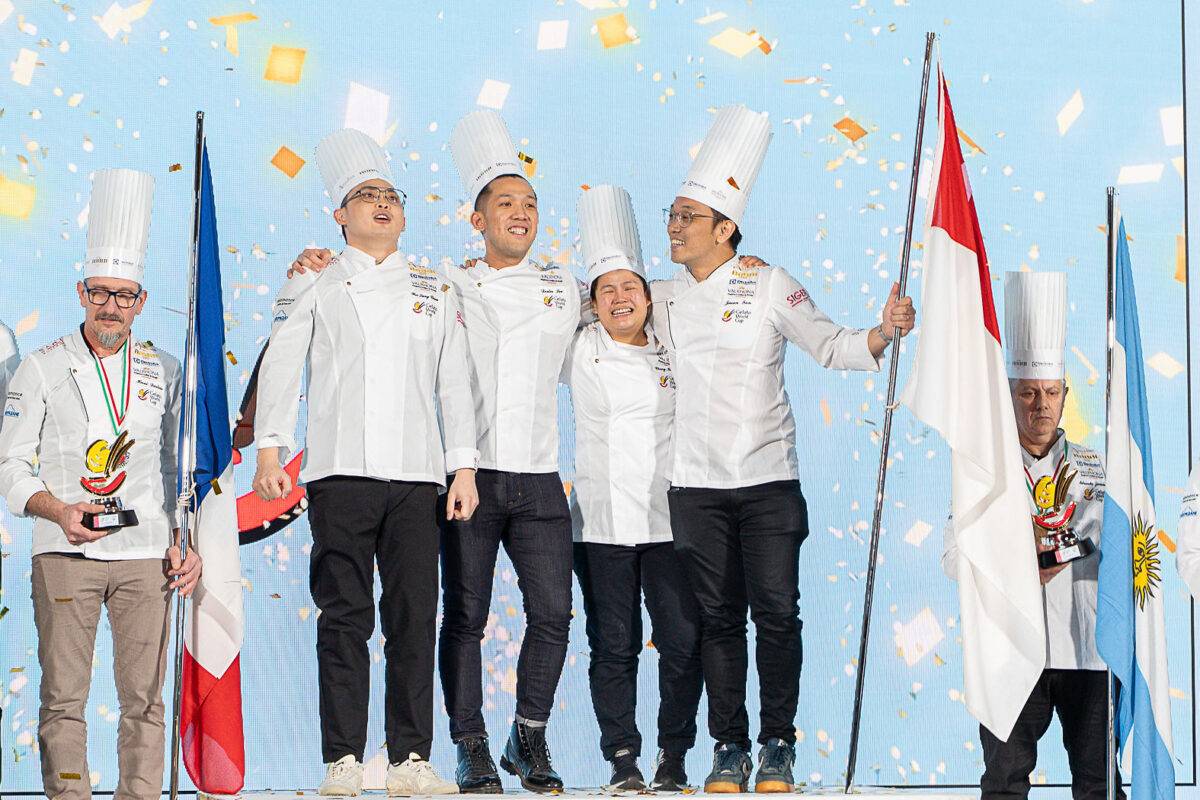
SINGAPORE — The Singapore Chefs’ Association (SCA) and the Singapore Pastry Alliance (SPA) are proud to announce that the Singapore National Pastry Team has emerged victorious, clinching the world championship title at the prestigious Gelato World Cup (Coppa del Mondo della Gelateria) in Rimini, Italy. Held from 16 – 20 Jan, the 11th edition of the competition brought together 12 countries including Argentina, Belgium, China, Ecuador, France, Japan, Indonesia, Italy, Mexico, Peru and Poland.
In a display of technical precision and resilience, the Singapore team outperformed the world’s top culinary nations, marking a historic milestone for the local pastry scene. This victory signals Singapore’s ascent to the top of the global gelato hierarchy, a journey that saw the team rise from a fifth-place finish in 2024 to the gold medal today.
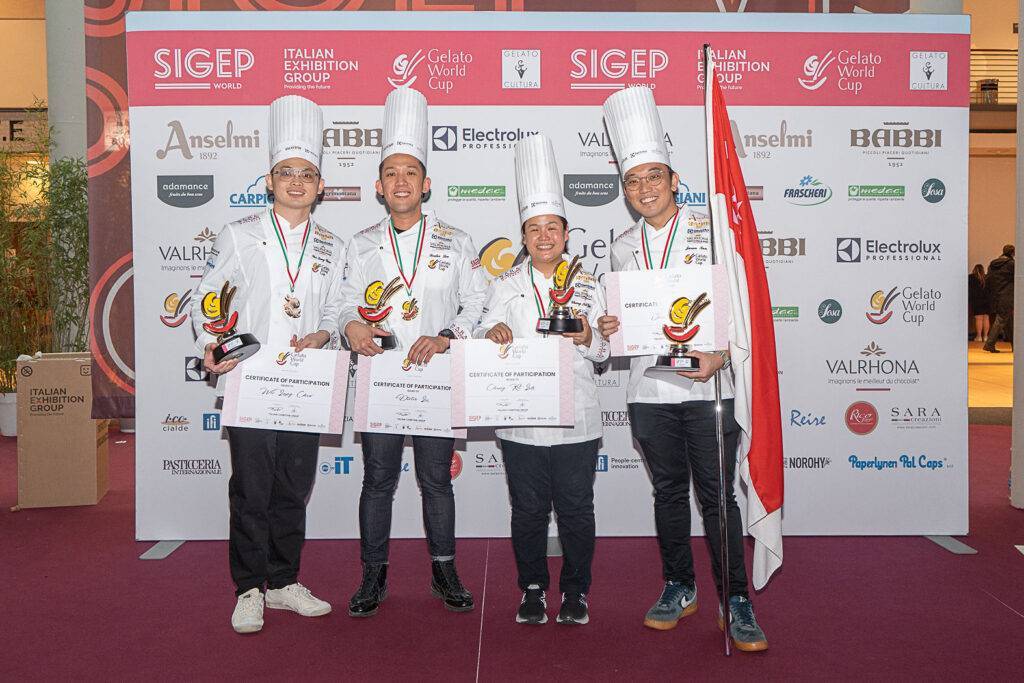
The Gelato World Cup is the most prestigious international competition dedicated to the art of gelato. Held biennially in Rimini, it brings together the elite of the pastry world to be judged by an international panel of experts. The competition is designed to push the boundaries of texture, temperature and taste, defining global standards for the craft.
The victory was achieved by a quartet of local talent, each bringing a specialized skill set to the competition floor:
Jason Tan Yirong (Team Manager): Head of the studio division at Euraco Finefood. A Le Cordon Bleu Sydney top graduate and champion of the 2018 Asian Gelato Cup, Tan provided the strategic leadership and veteran experience necessary to guide the team to gold.
Dexter Lee: Executive pastry chef at Bidfood Singapore and Gourmet Partner Singapore. A 2022 Global Pastry Chef Challenge champion, Lee’s expertise in ice carving and chocolate molding was instrumental in the team’s artistic presentation.
Loh Cheng Kit: Pastry chef at Swissotel The Stamford and Fairmont Singapore. A seasoned competitor and champion of the 2022 Asian Gelato Cup, Loh brought elite technical gelato craft honed in Singapore’s leading five-star kitchens.
Chew Wei Lung: Junior sous chef at Mandarin Oriental, Singapore. The youngest member and a rising star, Chew showcased mastery in sugar sculptures, having recently won Best Sugar Showpiece at the 2025 Singapore Pastry Cup Selection.
The competition structure is grueling, requiring each member to execute specialized tasks under intense scrutiny. The team delivered a comprehensive portfolio of work, including:
The Chestnut Gelato Logcake: A new test in this year’s edition where teams have to create a gelato logcake with Chestnuts.
Gelato Sticks: Another new addition to this year’s test to introduce a playful yet elegant way of experiencing gelato reimagined on a stick.
The Gelato Cake: A sophisticated marriage of pastry architecture and frozen textures.
The Mystery Box: A test of intuition, where the team created a flavor using unknown ingredients revealed only at the start.
Gourmet Gelato with 3 savory appetizers: A savory-sweet fusion designed for high-end gastronomy.
Gelato Glass: An elegant expression of creative textures and contrasting temperatures, brought together in a refined form.
Gelato Snacks: transforming gelato into refined bite-sized creations, highlighting texture, temperature, and creativity in every mouthful.
Chocolate Carving: Showcase of traditional artistry, expressed through the precision and discipline of hand carving.
Artistic Showpieces: Complex, artistic sculptures made of chocolate.
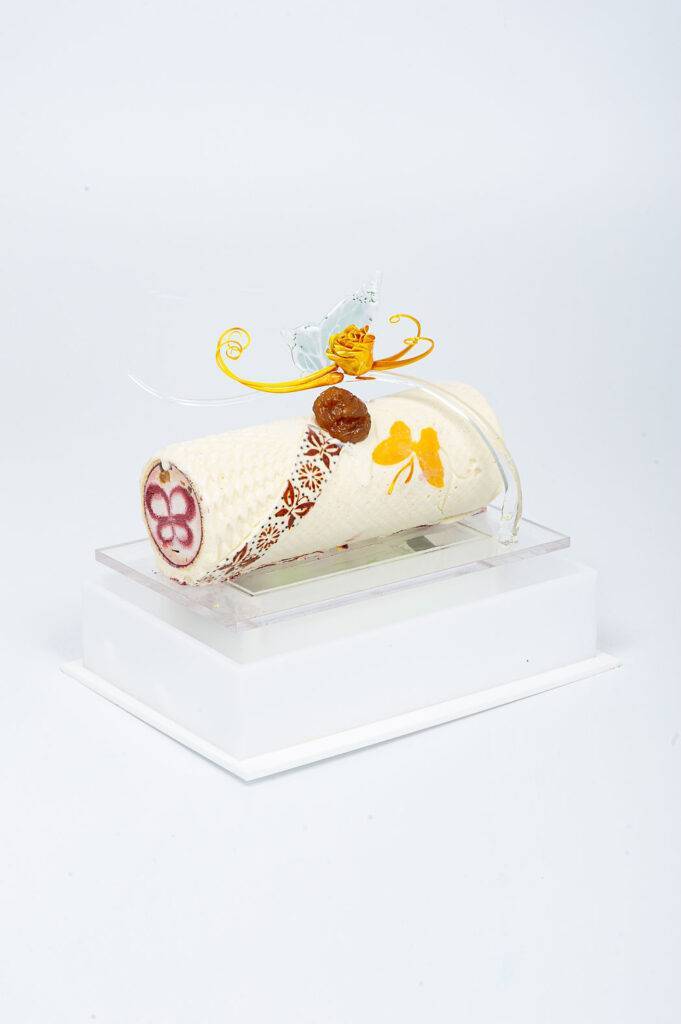
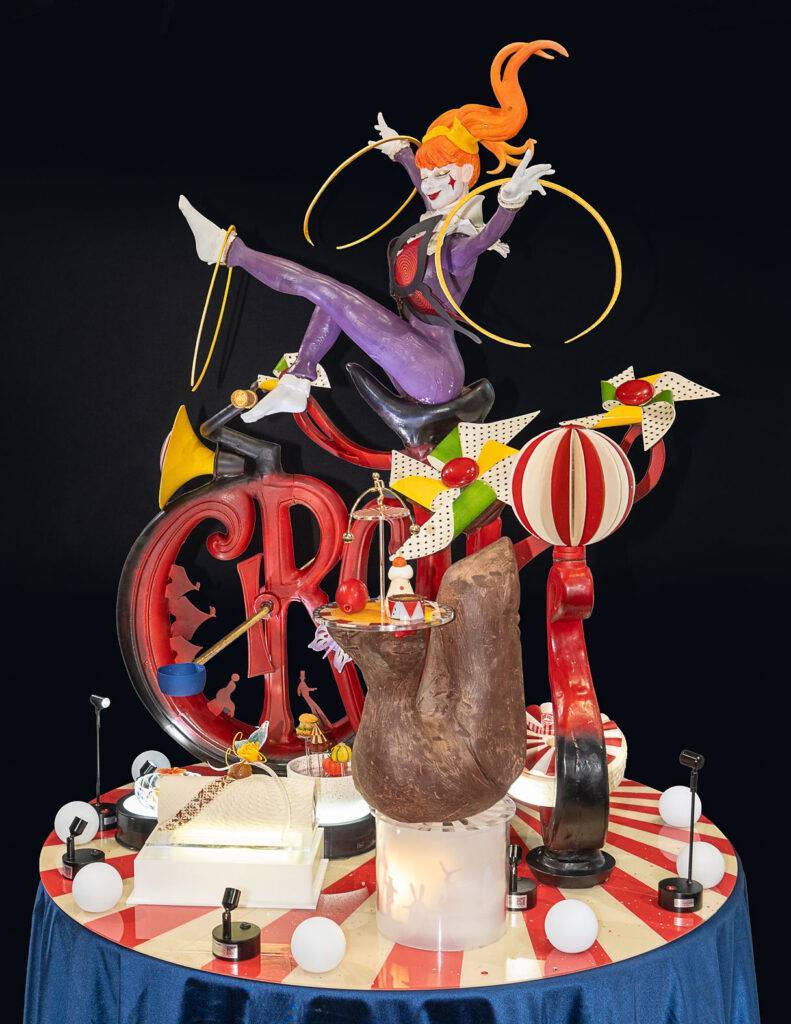
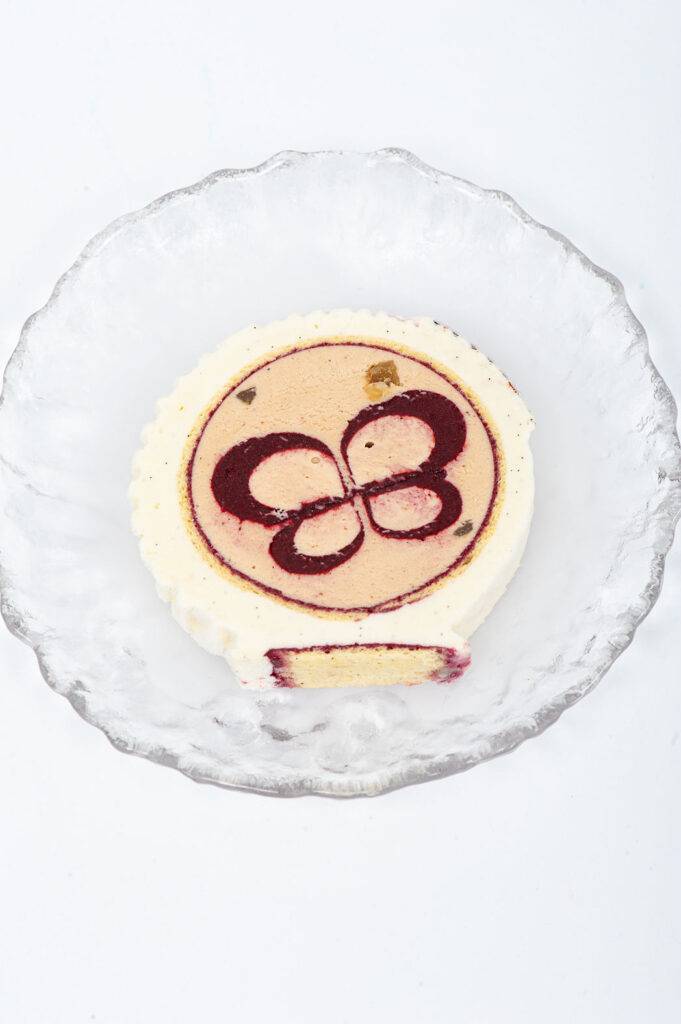
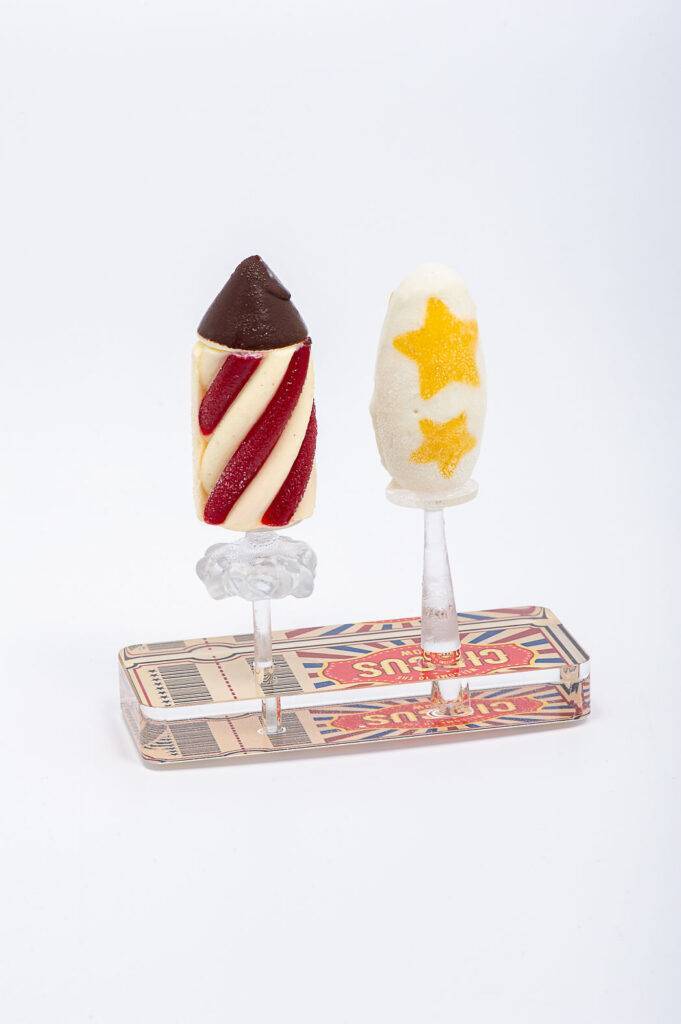
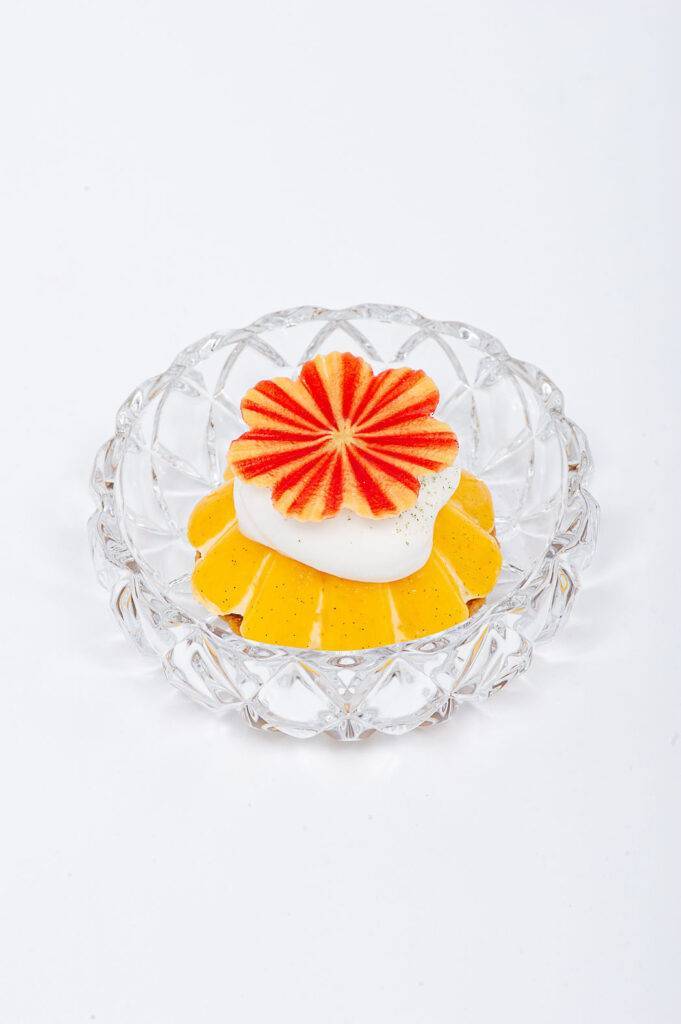
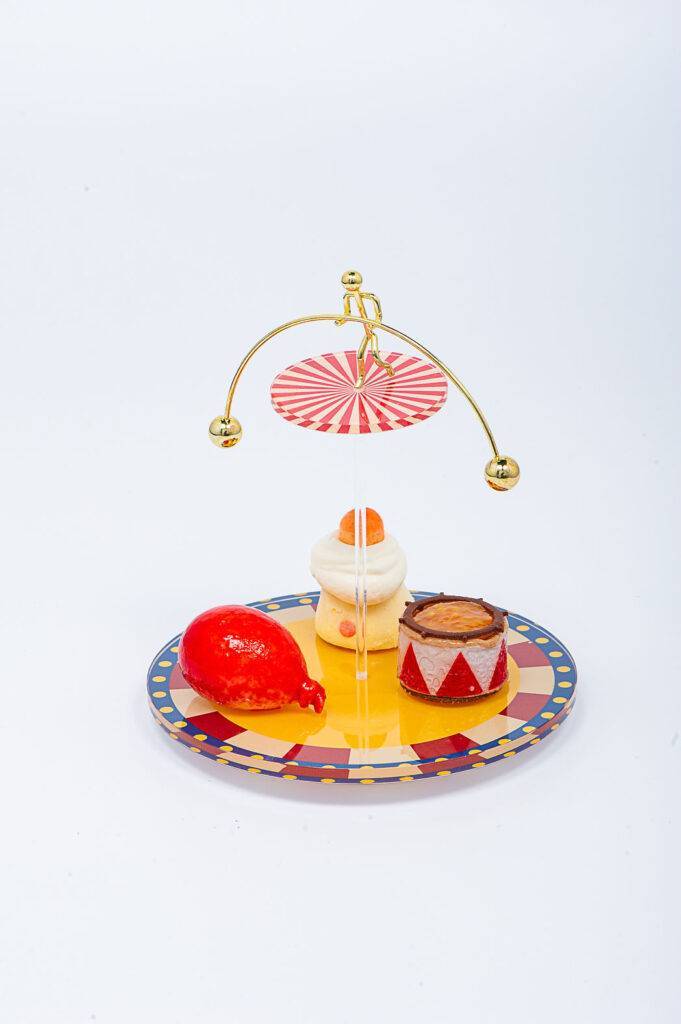
Behind the flawless final presentation lies a story of sacrifice and the “Singapore Spirit.” The team’s journey was nearly derailed by a personal crisis just hours before departure.
Jason Tan Yirong, team manager, shared his reflection on the emotional win:
“This has been a journey filled with many challenges. One of our team members almost had to pull out because of a family emergency that occurred one day before the team was supposed to fly off. Until the last moment we didn’t know if he will able to join us. He eventually arrived one day before the competition. Despite all the setbacks before and during the competition, the team stayed strong and united in spirit, remained calm and forged on. We had a lean budget this year to work with, so this achievement has been amazing. This is the Singaporean story of how we were able to overcome the odds and reach the top.”
Says Gary Lim, President of Singapore Pastry Alliance, “We are proud of the team and this opportunity do Singapore proud. A big thank you to our mentors and sponsors who supported us.”
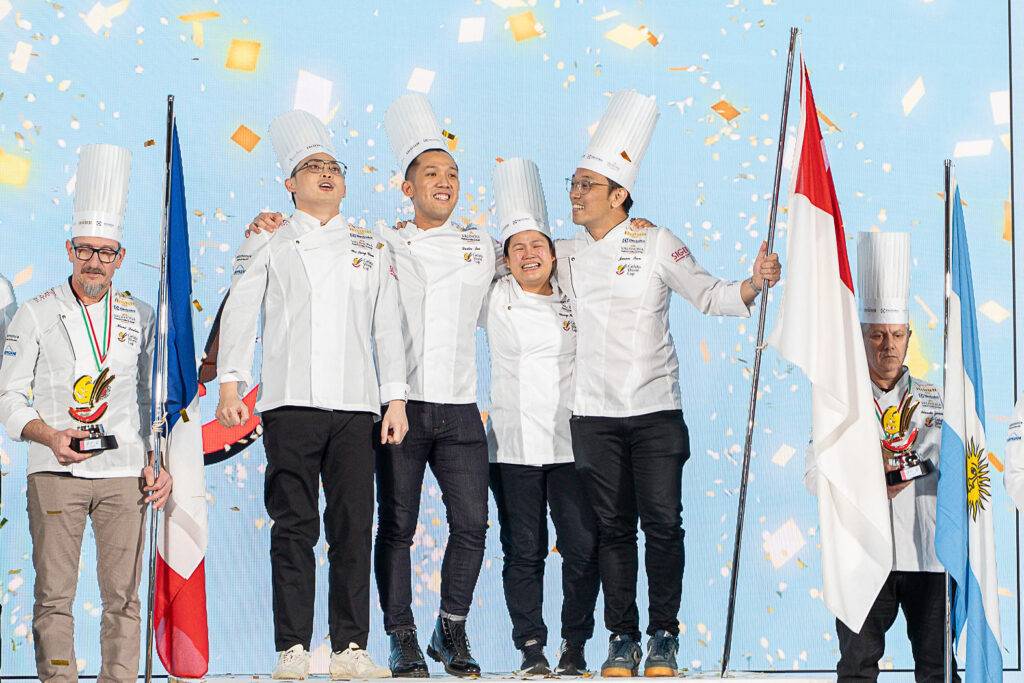
Photo credits: Photos courtesy of Gelato World Cup 2026
Founded in 1984, the Singapore Chefs’ Association stands strong as the official government-recognised non-profit national chefs association, focused on representing professional cooks in the local food and beverage industry.The SCA umbrella includes two strategic sub alliances – the Singapore Pastry Alliance (SPA) and Singapore Junior Chefs Club (SJCC). These two alliances allow the association to address the needs of the pastry chefs and young chefs in Singapore. SCA is proud to be the only association in Singapore that is a national member in the World Association of Chefs Societies (WORLDCHEFS).
As the official voice representing chefs working in Singapore, SCA also establishes and mentors the National Culinary Team for international competitions locally and overseas, representing Singapore at podium positions in many competitions. The educational and social activities promote interaction and networking among members and helps to train the culinary workforce to improving skills and productivity standards in their respective workplaces. The association is managed by a committee powered by a team of volunteers.
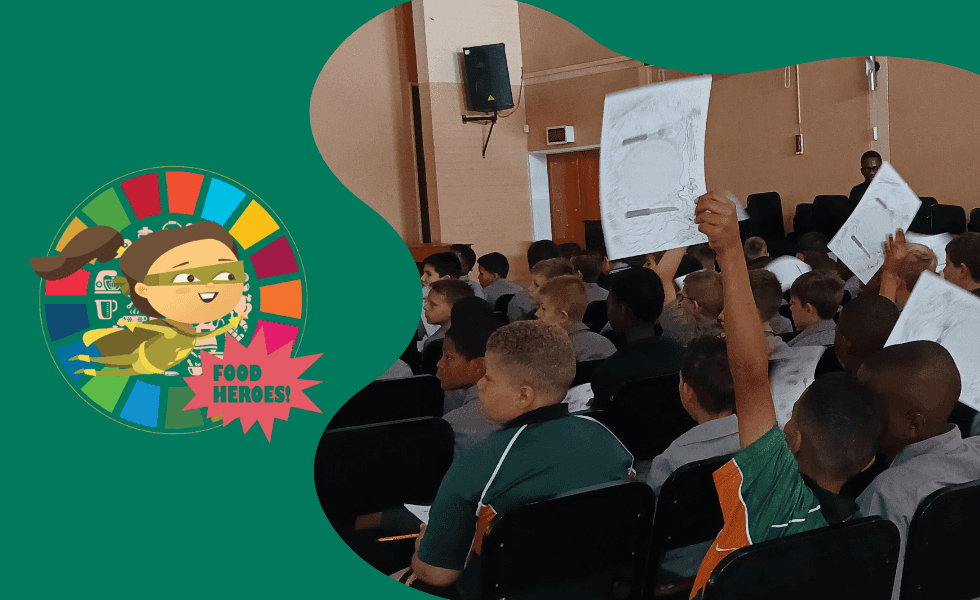
Food Heroes is helping shape a generation that understands the power of food beyond the plate. As part of Worldchefs’ Feed the Planet initiatives, the Food Heroes program empowers children to explore how their everyday food choices impact their health, their communities, and the planet they will inherit. Since its launch in 2018, more than 300,000 children across over 30 countries have participated in the program through the collaboration between Worldchefs, the Electrolux Food Foundation, and AIESEC, all united by a shared commitment to for a sustainable future.
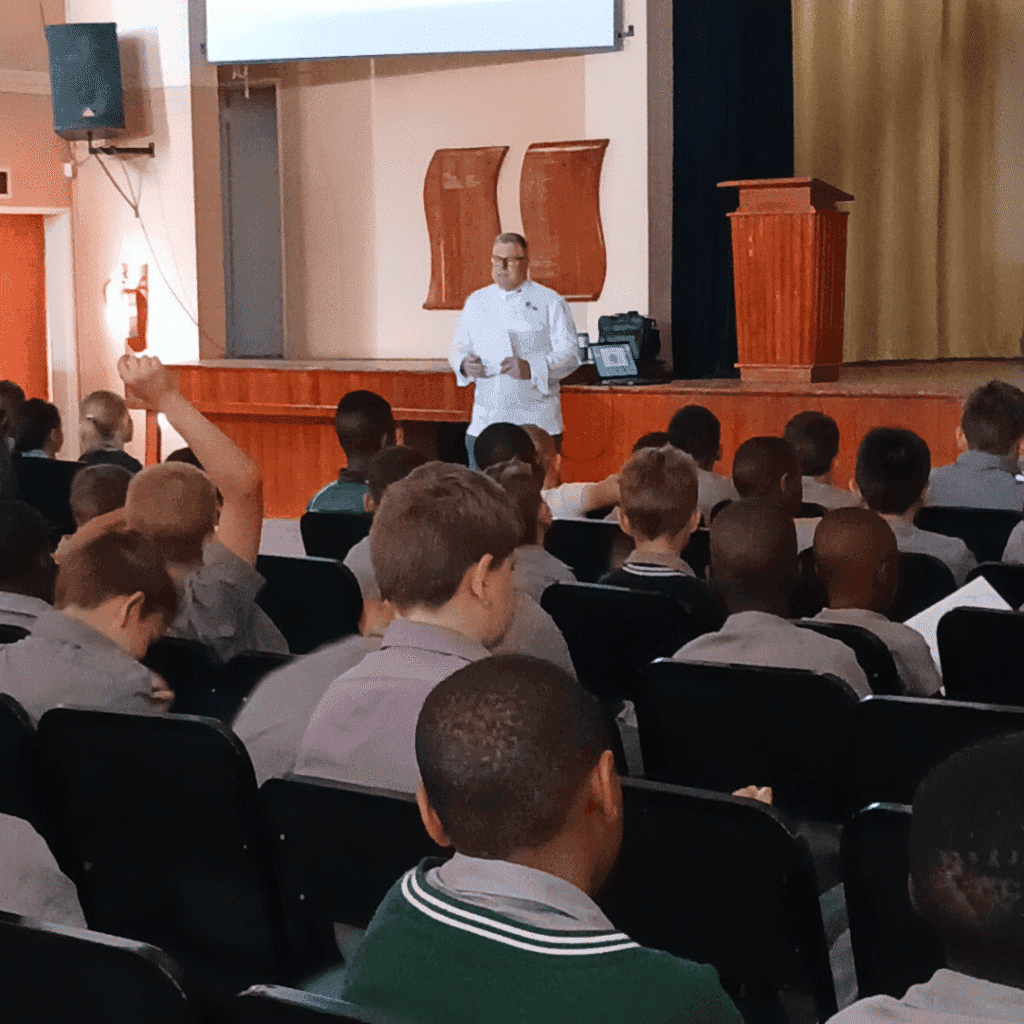
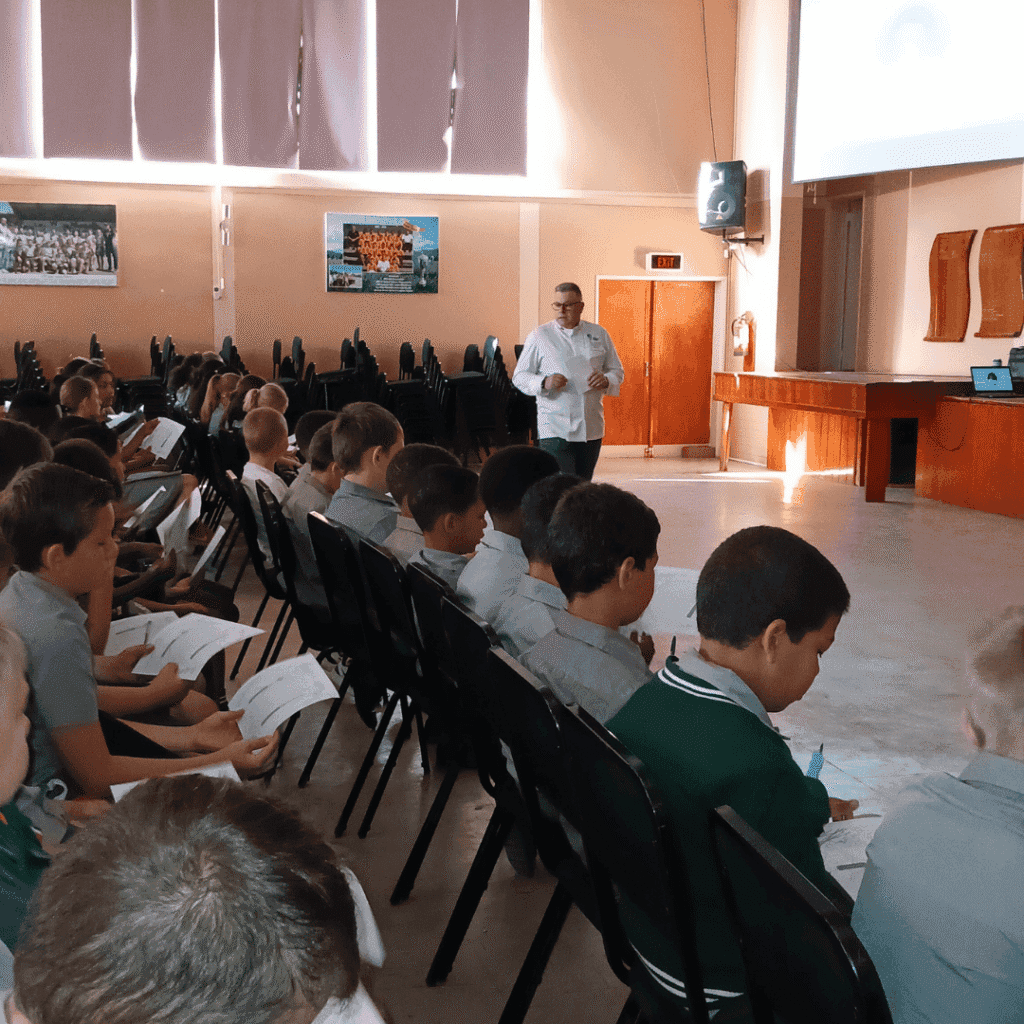
At the end of October 2025, Food Heroes reached a new milestone with its first workshop in Namibia. Led by Chef Terry Jenkinson, the workshop welcomed approximately 220 Grade 4 students, marking the program’s debut in the country and opening the door to meaningful conversations about food sustainability at a young age.
As a member of the Feed the Planet Committee, Chef Terry facilitated his first Food Heroes workshop, guiding students through topics such as reducing food waste, caring for the environment, and ensuring a secure food supply for the future. The students responded with enthusiasm and curiosity, remaining engaged and attentive throughout the session.

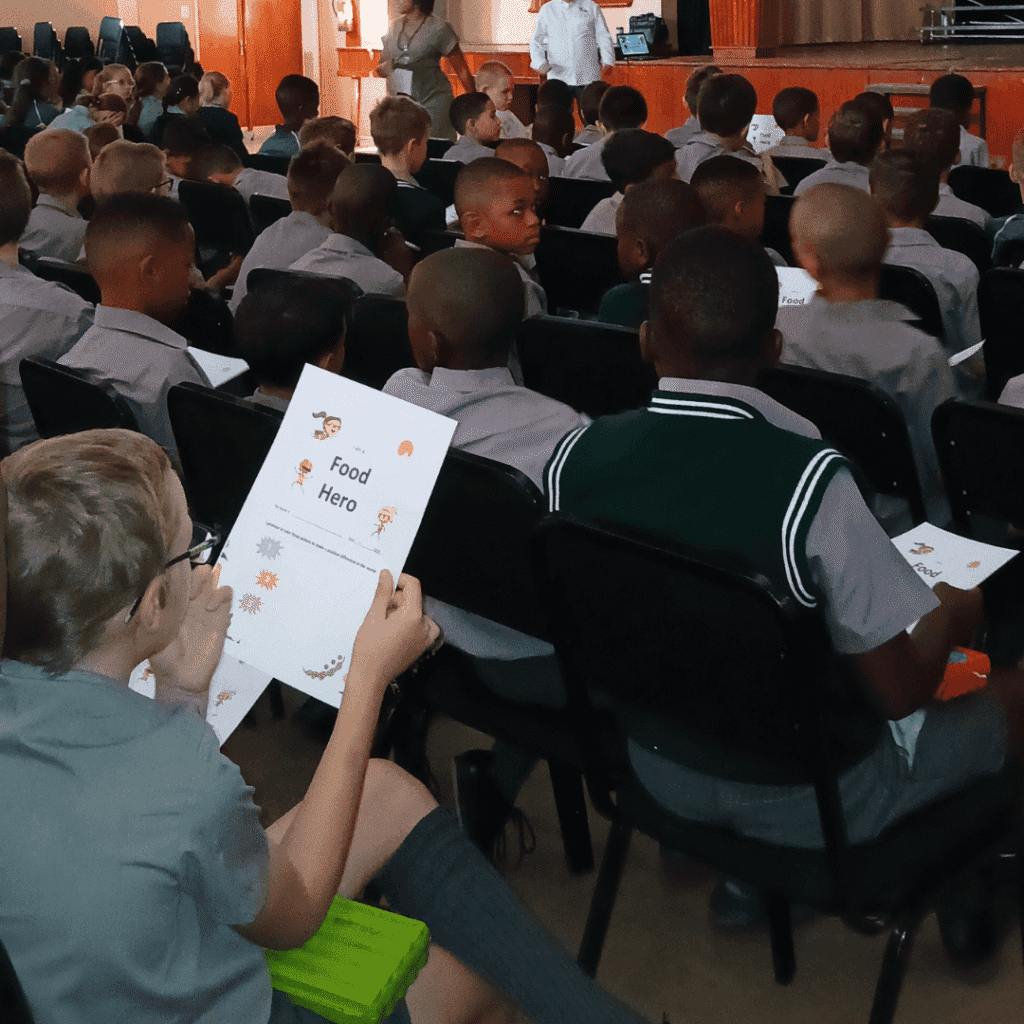
Reflecting on the experience, Chef Terry shared:
“The fact we are making strides in creating awareness on the importance of wasting less, caring better for the planet and a secure food supply is worth every minute and every child reached.”
By inspiring young people to think differently about food, Food Heroes continues to build momentum around education, sustainability, and collective responsibility.
Learn more about Food Heroes and how to get involved at https://feedtheplanet.worldchefs.org/food-heroes/.

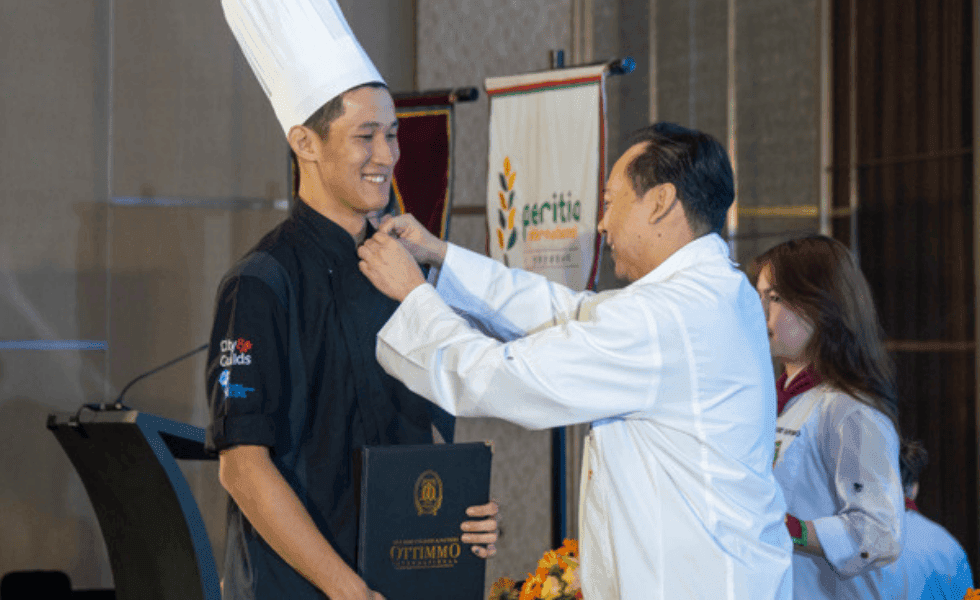
As a valued Worldchefs Education Partner, OTTIMMO International, located in Indonesia, continues to play an important role in shaping the next generation of culinary professionals through high-quality education, hands-on training, and global industry standards. In November 2025, OTTIMMO marked a significant milestone by celebrating the graduation of its latest cohort of students with a ceremony.
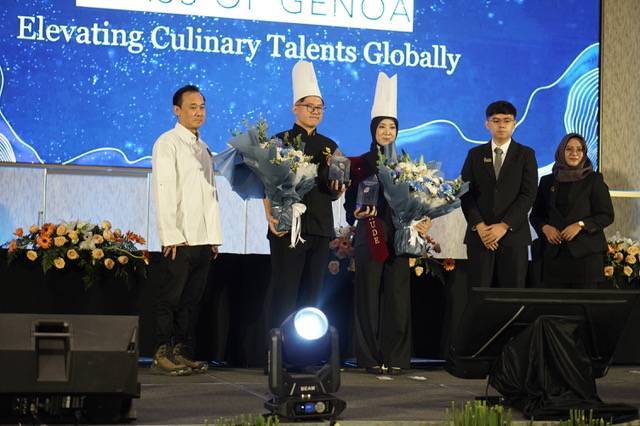
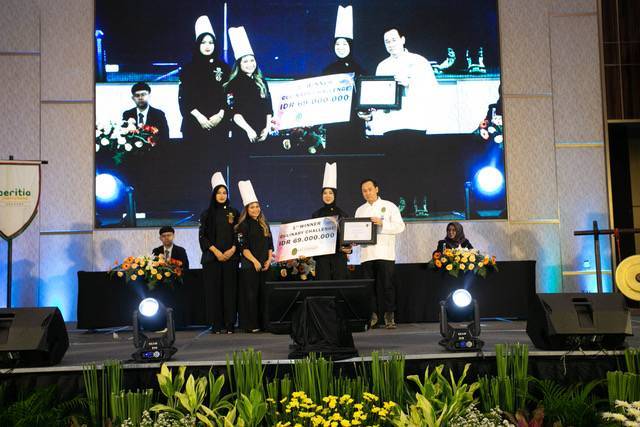
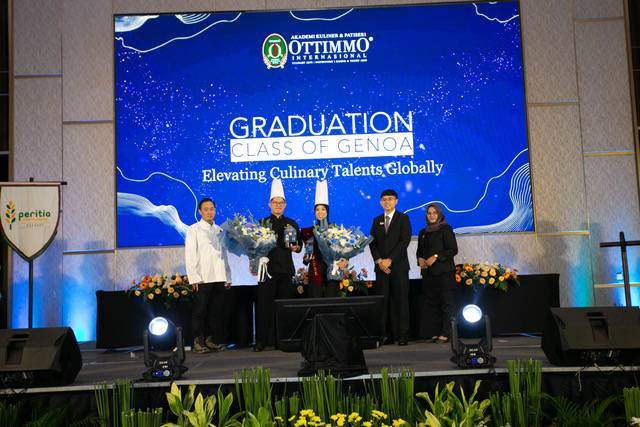
The international graduation ceremony was a truly memorable milestone, celebrating not only academic achievement but also the passion, discipline, and growth of every student who completed their journey with OTTIMMO. Held in a warm and vibrant atmosphere, the event unfolded smoothly from start to finish, reflecting the dedication and careful preparation of the entire team.
From the opening session to the final applause, the celebration was filled with pride and excitement. Parents watched with emotion as their children stepped forward for the pin mounting, marking the culmination of months of hard work, perseverance, and hands-on learning. The students, beaming with confidence, shared a collective sense of accomplishment and anticipation for their future in the culinary world.
One of the most anticipated moments of the day was the announcement of the Culinary Challenge Winner, along with the Runner-Up, recognizing outstanding creativity, technical skills, and professional standards demonstrated during the competition. In addition, the Best Graduate award was presented to a student who consistently exemplified excellence, leadership, and strong commitment throughout the program.
As part of OTTIMMO’s collaboration with Worldchefs, the Best Graduate, Culinary Challenge Winner, and Runner-Up were awarded Worldchefs Certified Commis Chef badges, an internationally recognized acknowledgment that highlights their readiness to step into the professional culinary industry and compete on a global level. This achievement marked an important milestone in their early professional careers.
The ceremony concluded with heartfelt congratulations, photo sessions, and joyful conversations, leaving lasting memories for students, parents, and faculty alike. It was a celebration of success, community, and the beginning of many promising culinary careers.
Congratulations to the graduates and OTTIMMO!
To learn more about becoming a Worldchefs Education Partner, visit https://wc.staging.worldchefs.org/education-partner/
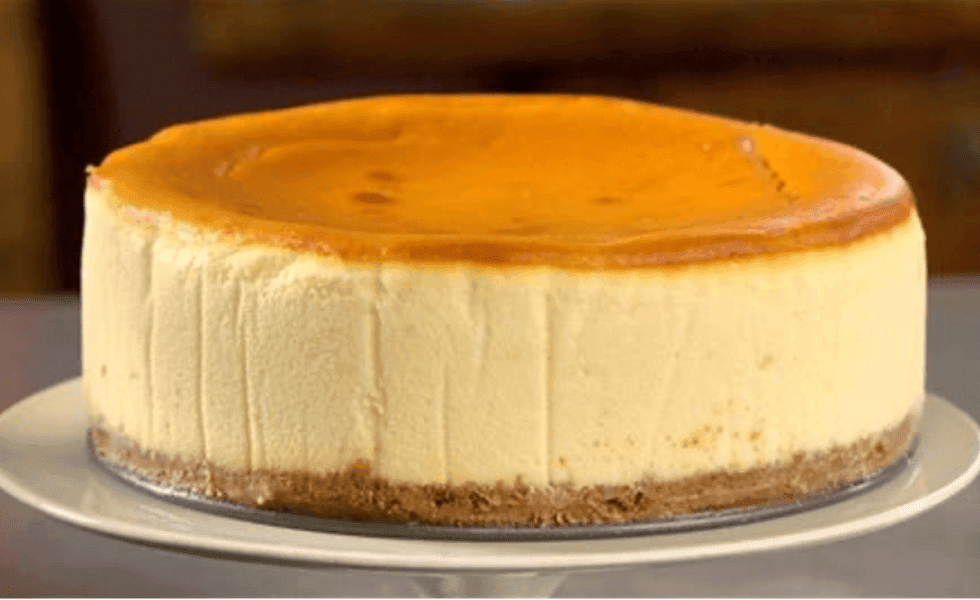
See below for recipe
A history lesson about the product known as cheesecake itself. It is believed the first cheesecake came from the Greeks as anthropologists excavated cheese molds on Samos Island that has an origin date as far back as 2,000 B.C. There are biblical references to cheese and cheese products such as Job’s “Did you not pour me out like milk and curdle me like cheese?” quote from the tenth vers of its tenth chapter. It is also mentioned in 1 Samuel 17:18, “Also take these ten cheeses to the commander of their thousand. See if your brothers are well, and bring some token from them.” This is when a young David was sent by his father to meet up with his older brothers who were serving in King Saul’s army when the Israelis were at war against the Philistines. This was the same military conflict when David went up against the giant known as Goliath and struck him down with a single stone shot in the forehead.
Was it possible cheesecake was a product already available during the timeline of the Bible itself? Considering what was found on the Greek Island that is believed to be over four thousand years old, the answer to that would be yes. In Greece, cheesecake was considered to be a good source of energy. This was something they likely learned from civilizations that date even further back than the Ancient Greeks as we know it. In fact, the first Olympic Games, which were dated in 776 B.C., had the athletes on a cheesecake diet as a means to optimize their performance level as competitors.
At the time, the Greeks used the simple formula of cheese, honey, and wheat flour to form their cheesecakes. Among ancient cultures like the Greeks, wedding cakes were made from cheesecake instead of what is traditionally being used today. At the time, the recipe called for the cheese to be beaten down in a brass pan until it was smooth and paste-like before adding in the flour and honey. The mixture would be heated up, then thoroughly cooled before serving.
Right after the Greeks were conquered by the Romans, the original cheesecake recipe was modified to include crushed cheese and eggs. This time, all the ingredients were baked under a hot brick and served warm. It was also during this time the Romans began to put this cheese filling in a pastry, then serve this on special occasions. The Roman credited with the oldest known cheesecake recipe was a politician named Marcus Cato. His recipe was dated to the first A.D. century. As the Romans continued to conquer one nation after another as they expanded their empire, various cheesecake recipes were introduced to the rest of the European population. While each culture further evolved into its own identity, nation for nation, so did the variations of how to make a good cheesecake.
When the first cookbook in history was printed in 1545, cheesecakes were described as flour-based sweet food. At the time, chefs serving royal families would spend hours perfecting cheesecakes according to their own ideas. It wouldn’t be until the eighteenth century the cheesecake styles modern society recognized today would finally begin to take shape. It was at this time the Europeans began using beaten eggs instead of yeast to make their baked goods rise. Doing so removed the yeast flavor so that the cheesecakes would taste more like a dessert. It was this style of cheesecake the Europeans brought with them when they began to migrate to the United States. It would be in the 1730s that Philadelphians introduced the Cheesecake House Tavern. At the time, however, it was a different recipe than what the innovative bakers from New York did that would turn into something else.
In 1872, a Chester, New York dairy farmer named William A. Lawrence was attempting to replicate the French cheese known as Neufchatel. The end result wasn’t as expected as the process led to the creation of cream cheese. As it turned out, this accidental discovery became an American staple ingredient. Three years later, he was approached by a New York grocery firm to modify an even richer version that saw large amounts of heavy cream added to make this cheese more spreadable. It was then packaged in foil and distributed to local stores with the brand label Philadelphia Cream Cheese. This company was later purchased in 1903 by the Phoenix Cheese Company, then purchased in 1928 by Kraft Foods Inc.
Despite the change in ownership, Philadelphia Cream Cheese remains the familiar favorite that graces the North American grocery stores even today. Despite its name, Philadelphia Cream Cheese started off as a New York product. The name was chosen as a marketing ploy by A.L. Reynolds as creamier cheese products typically came from Pennsylvania-based dairy farmers as opposed to the farms in New York at that time.
The classic New York-style cheesecake, as it was accidentally intended in 1872, was served as the cake only. There were no additions such as fruit or any other kind of topping as this would have served as an insult to the signature flavor at the time. The extra egg yolks that were used in the cream cheese cake mix managed to accomplish this. An authentic New York Cheesecake is known for its smooth taste on its own, which is why it became so famous in the first place. Upon the turn of the twentieth century, New Yorkers were so in love with the dessert that there were very few restaurants in the region that didn’t have their own version of cheesecake on their own menus. Interestingly enough, the rest of America had yet to catch on as they still favored the cheese curd style of European origin.
James L. Kraft migrated to Buffalo, New York from Fort Erie, Ontario, Canada, in 1902 to assume the role of secretary and treasurer of the Shefford Cheese Company. In the next year, he became a partner in the company before the agreement was abruptly dissolved when he went to Chicago, Illinois on a business trip. With only sixty-five dollars to his name, Kraft rented a horse and wagon to establish his own business of buying cheese at wholesale prices before selling it to local retail grocers. At first, he struggled before deciding to make God a business partner. Five years later, his business grew large enough that he recruited his five brothers to join him.
In 1912, J.L. Kraft & Bros. Company established its New York City headquarters. This was the same year Kraft invented a method to pasteurize cheese. By 1914, what started off as J.L. Kraft & Bros. Company became Kraft Foods Inc in Stockton, Illinois. In 1916, Kraft patented its pasteurizing cheese process that became spoilage resistant. This allowed the cheese to be shipped at longer distances without the need for refrigeration.
Not only did New Yorkers benefit from this as cheesecake buffs but it played an instrumental role in the evolvement of this delicate dessert. As fate would have it, 1928 witnessed Kraft Foods Inc buying out the Phoenix Cheese Company, gaining full ownership of Philadelphia Cream Cheese, and the creative direction it would take as the leading brand of choice when it comes to making the perfect New York-style cheesecake.
Arnold Reuben started with the classic New York Style Cheesecake during the early 1930s didn’t come about until after cheese producers began to use stabilizers during the late 1920s as a means to smooth out the cream cheese mixture. Culinary buffs who passionately follow food history will recognize Arnold Reuban for his signature sandwiches. He is also the man behind the creation of the New York Style Cheesecake as we know it. Born in Germany in 1883 before moving to America’s New York City when he was still young, he was invited to a dinner party where he was served his first cheese pie. He was so intrigued with this dish that he began to experiment with the cheesecake recipe until he came up with a new and improved version of an accidental mistake that was first made in 1872.
The usage of cream cheese among New Yorkers was a far cry from what the Greeks normally use, which has been feta and mizithra. The Romans use ricotta while the Germans go with cottage cheese and the Japanese use a cornstarch and egg white mix. Around the world, this iconic food item has stood the test of time as a food favorite for sweet tooths of all ages. In America, as the beloved cheesecakes continued to evolve, the moment the cream cheese-based versions reached New Yorkers the North American culinary world forever changed.
Arnold Reuban, the Jewish immigrant from Germany, practically turned New Yorkers into cheesecake lovers as he ran a succession of Manhattan restaurants. This is also the same man behind the infamous Reuban sandwich with its rye bread, sauerkraut, sliced corned beef, Russian dressing, and Swiss cheese combination before it was grilled to perfection. It wasn’t uncommon to witness a hungry New Yorker enter one of Reuban’s restaurants, devour a sandwich, then some cheesecake, before going on their merry way with full bellies.
What he started as a trend quickly saw rival delis and restaurants inspired to do the same thing with their own versions. This includes a certain deli named Lindy’s Restaurant that opened its doors in 1921 on Broadway near 50th street in Manhattan. Like Reuban, Leo and Clara Lindemann were New York immigrants from Germany. Just like Reuban, they opened up their own deli that featured an impressive menu of mouthwatering sandwiches and delectable cheesecake desserts. However, what set Lindy’s apart from its chief competitor was the decision to top its cheesecakes with strawberries in a gel. At one point, a rumor circulated Lindy hired one of Reuban’s bakers in order to acquire his unique recipe. It wasn’t until a 1948 publication in the Los Angeles Times revealed Lindy’s cheesecake recipe came from food journalist Clementine Paddleford and Chef Paul Landry.
As a frequent customer, novelist Damon Runyon wrote and published his stories that often referenced Lindy’s as “Mindy’s.” These stories later inspired the 1950 Broadway musical, Guys and Dolls, a theatrical production that wound up immortalizing Lindy’s and the infamous cheesecakes. As “Mindy’s,” it was wagered whether it sold more than its equally famous apple strudels. As the famed New York cheesecakes continued to grow in popularity, so did the competitiveness among New York City bakers. It would be during this time the introduction of graham cracker crumbs became the next common staple that would be frequently found as the crust of choice to accommodate cheesecake recipes. Sour cream also made its way into the recipe books, which brought forth an even creamier texture with tang. This came during an era when refrigerators and freezers became part of a grocery store’s floor space.
The New York-style cheesecake continued to evolve, thanks to Charles W. Lubin. In 1949, he opened up his own bakery in Chicago, Illinois which was named after his eight-year-old daughter, Sara Lee. The first product that came from this new company was a New York-style cheesecake that was sold fresh to local supermarkets. When the ability to refrigerate and freeze cheesecakes became possible five years later, Sara Lee became a nationwide phenomenon. This resulted in an even further spike in popularity of the New York-style cheesecake. In North America, these cheesecakes were sometimes used as wedding cakes, much like how this was done by the ancient Greeks.
Yields 8 servings
For more recipes, visit www.worldchefs.org/news.
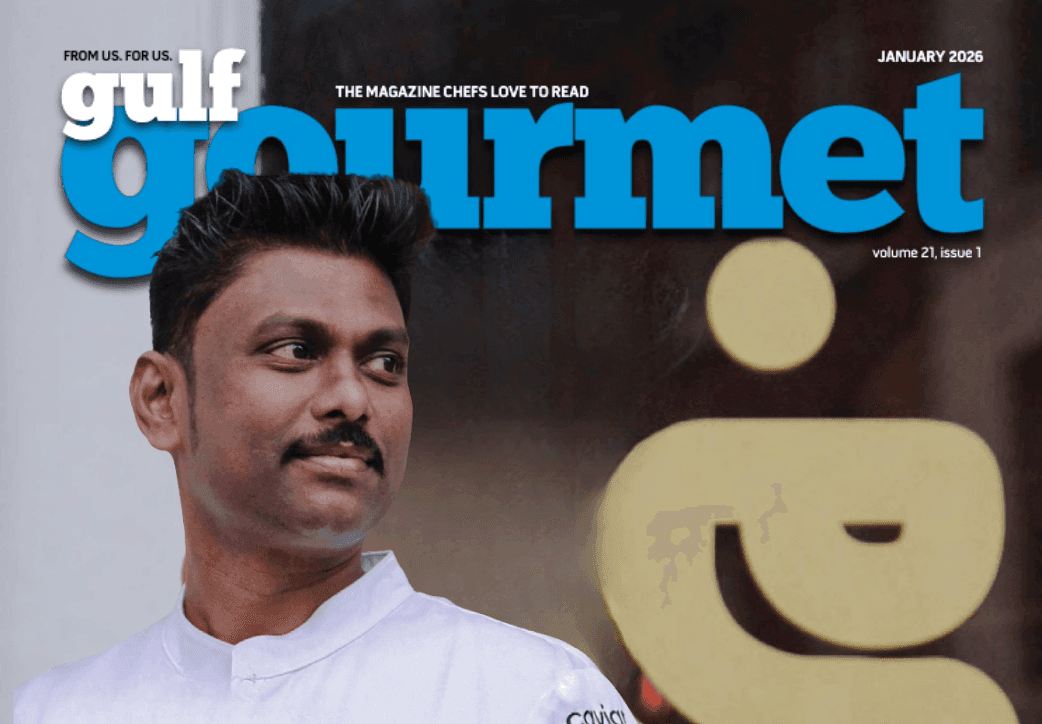
In the January 2026 edition of Gulf Gourmet Magazine, meet Chef Vijay Kumar, learn about Worldchefs’ community on Foodverse, and more.
To learn more about Worldchefs, click here.
An Overview of the Emirates Culinary Guild
The Emirates Culinary Guild (ECG) is the association of professional chefs of the UAE. It is a non-profit-making organisation, organised by volunteers dedicated solely to the advancement of culinary art in the UAE.
The World Association of Chefs Societies (Worldchefs) (www.worldchefs.org) is the 105-nation fellowship of the world’s various professional chefs’ organisations.
The ECG received its charter into Worldchefs at a ceremony in Stavanger, Norway on June 28, 1994, during the Worldchefs 26th World Congress. Worldchefs endorses the ECG as the authorized professional culinary association for the UAE. The ECG, thereby, has an international culinary focus and multi-national support for the staging of its various competitions, seminars and events.
The aims of the ECG, broadly, are:
Social media plays a large part in the Guilds self-promotion and the Gulf Gourmet magazine drive awareness around the globe.
Follow these links for more information on the Emirates Culinary Guild:
www.emiratesculinaryguild.net/, www.facebook.com/Emirates-Culinary-Guild-763644223697376/timeline/, www.facebook.com/gulfgourmet?fref=ts
Membership of the ECG is open to all of those professionally and solely involved in the preparation of food.
Anyone interested in the ECG please find their contact below.
The Emirates Culinary Guild
PO Box 454922 – Dubai – UAE
Tel: + 971 56 8014089.
E-mail: emiratesculinaryguild@gmail.com
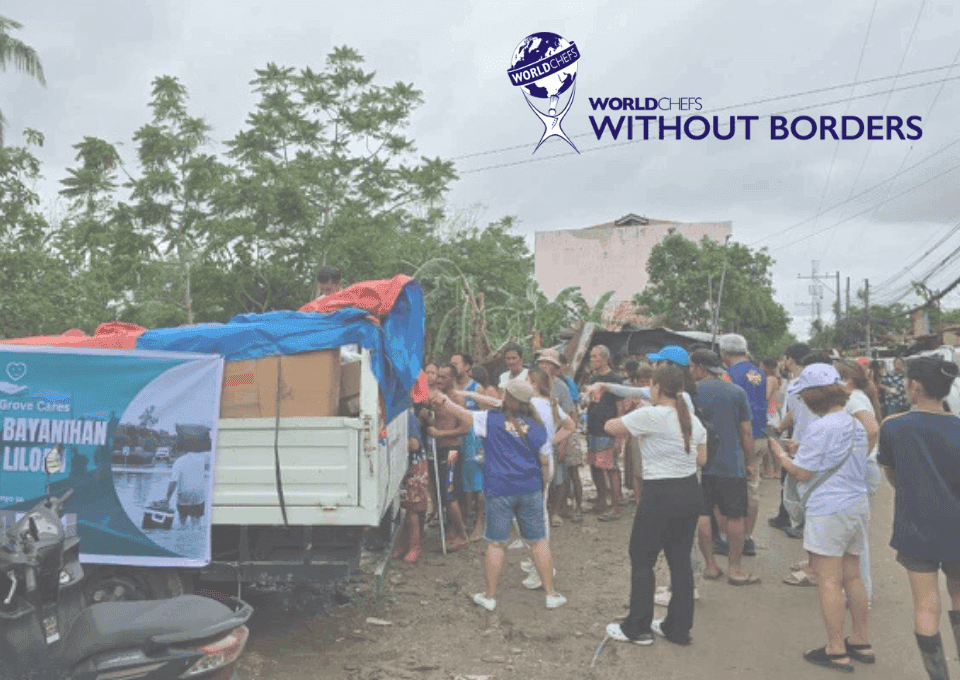
World Chefs Without Borders, the humanitarian arm of Worldchefs, has donated €18,000 to support relief operations in the Philippines following the earthquake and Tropical Cyclone Kalmaegi.
Paris, 8 January 2026 – World Chefs Without Borders (WCWB), the humanitarian arm of Worldchefs, has donated €18,000 to support disaster relief operations in the Philippines following a series of devastating natural disasters, including a powerful earthquake and Tropical Cyclone Kalmaegi.
In the latter part of 2025, Cebu, a major island in the Central Visayas region of the Philippines, was relentlessly battered by natural disasters, from strong earthquakes to powerful typhoons. One of the hardest-hit areas was Balamban, a town in western Cebu, where landslides cut off roads, isolated communities, and made it extremely difficult to reach survivors and deliver aid to thousands of families. Entire communities were displaced, infrastructure damaged, and essential services disrupted.
To support urgent relief efforts, WCWB mobilized its global chef network and partnered with chefs on the ground through the LTB Philippines Chefs Association, Worldchefs’ national member in the Philippines. The funds were allocated to prepare and distribute essential relief kits to families in the most affected areas.


On December 14, 2025, the LTB Philippines Chefs Association, together with Chef Celina David’s team and Duyan sa Paglayum, a local charitable organization, set out on a mission to the communities of Cantuod, Nangka, and Owak in Balamban to distribute relief packs to affected families. Though mountain roads had been cleared, the surroundings still bore stark reminders of the devastation the typhoons had inflicted on the island.
Each family received relief packs containing much-needed sleeping mats, blankets, towels, and rice, small comforts that meant so much to those who had lost almost everything. Back in the city, the team also extended relief to Subangdako, a community heavily affected by flooding, as well as to another neighborhood recently ravaged by a devastating fire that left hundreds homeless.
According to JA Ventura, President of the LTB Philippines Chefs Association, the situation in Cebu was critical:
“After being hit by a strong earthquake, Tropical Cyclone Kalmaegi wreaked another havoc in Cebu, leaving communities wiped out and hundreds either dead or missing. Electricity and communications were also cut off… ”
Working closely with local leaders, chefs on the ground assessed urgent needs and streamlined logistics. Community members pooled resources, including transport and volunteer manpower, to ensure aid reached those most in need as quickly and efficiently as possible.
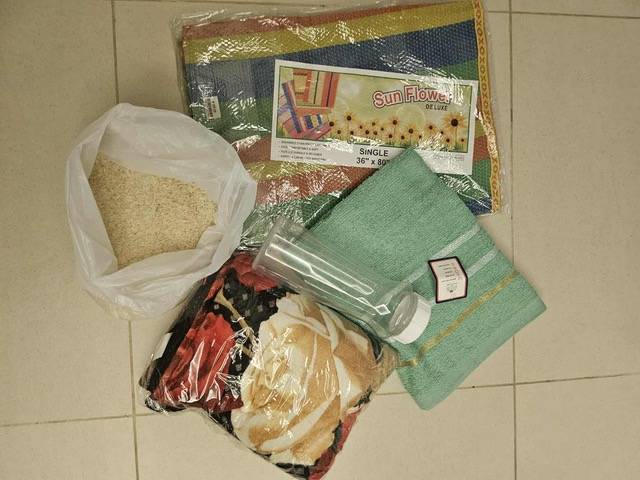
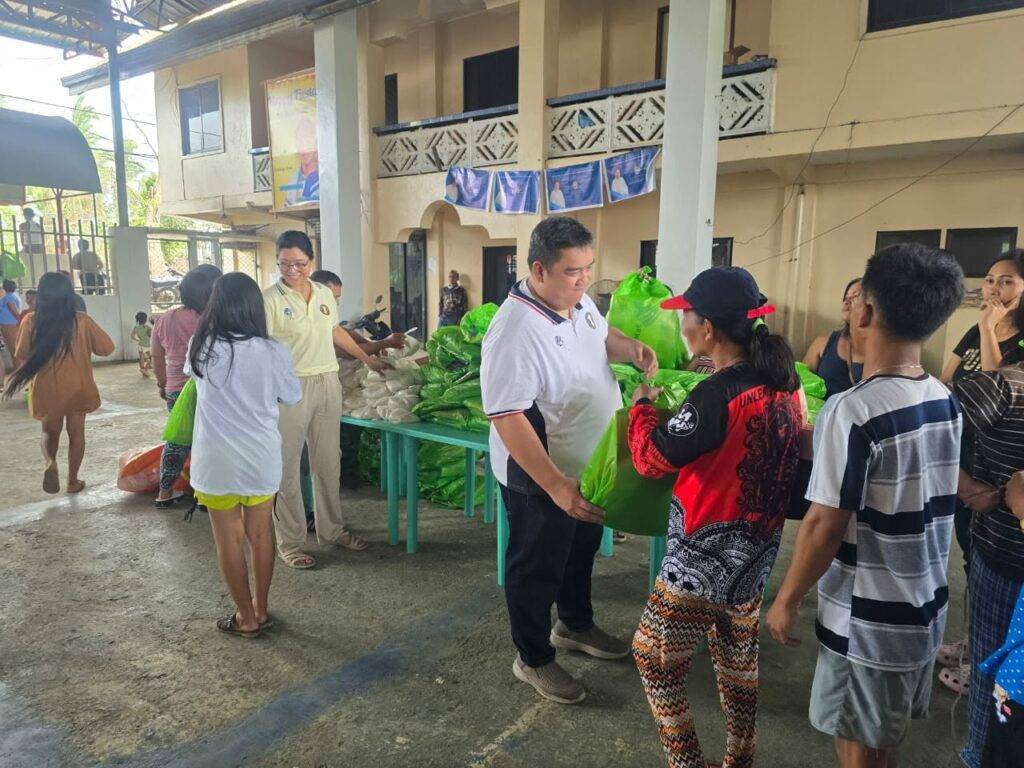
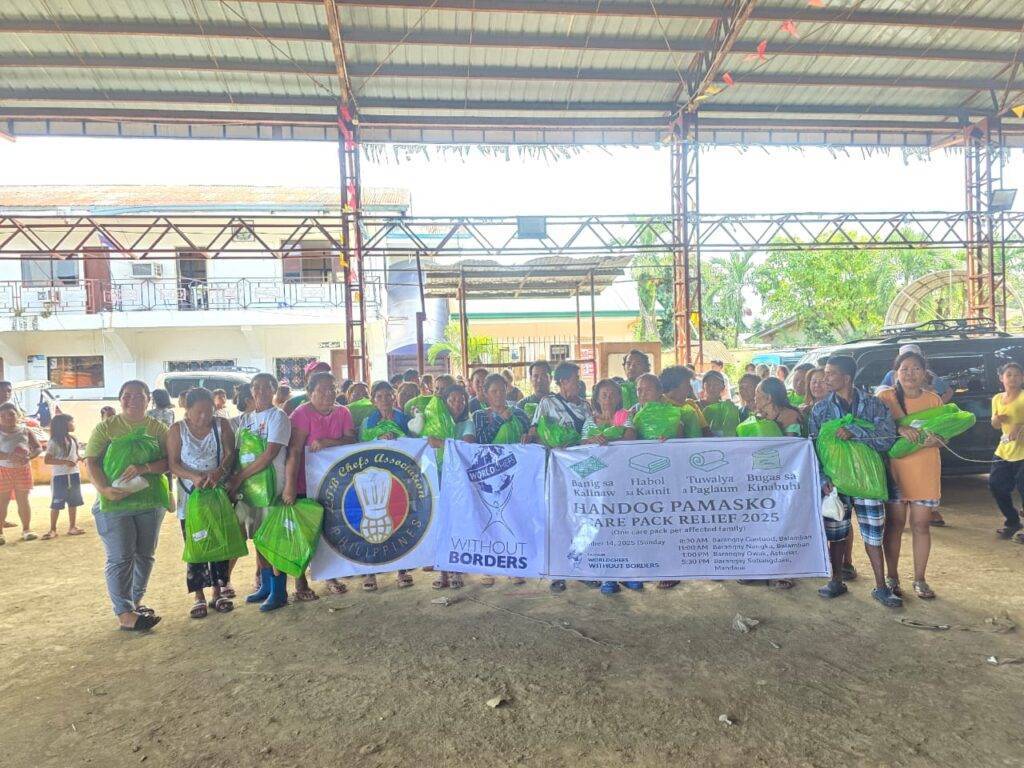
Through the unwavering support and funding of Worldchefs Without Borders, the team was able to extend relief to approximately 2,500 families—2,500 homes given not only material aid, but also a brief moment of comfort and a powerful reminder that even as the earth shakes and the waters rise, they are not alone.
This initiative follows WCWB’s continued global humanitarian impact. Earlier in 2025, WCWB and its international chef network also mobilized support for earthquake relief efforts in Myanmar, reinforcing the organization’s commitment to standing with communities in times of crisis.
“World Chefs Without Borders is committed to supporting communities in times of crisis,” said Willment Leong, chair of the committee. “Our chefs come together across borders to provide relief, nourishment, and hope. We stand with the people of the Philippines and the local chefs working to help them recover.”
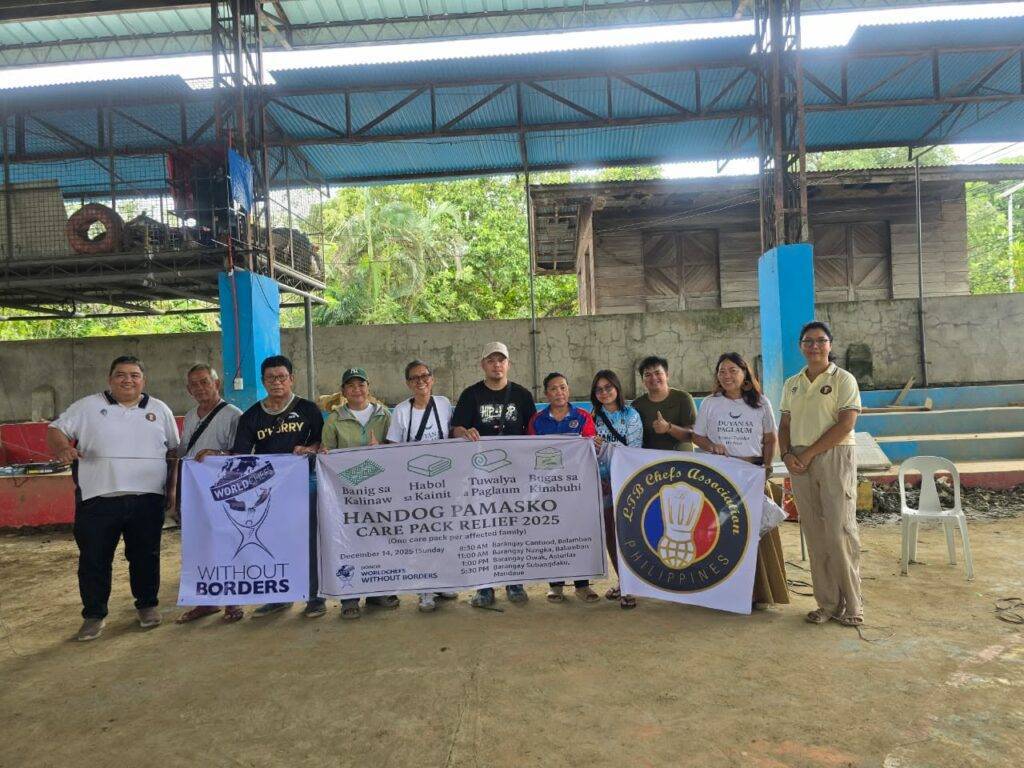
WCWB and the LTB Philippines Chefs Association extends heartfelt thanks to all those who made this relief effort possible:
Your aid did not only bring essential relief to 2,500 families, but it also brought hope. Through your compassion, strangers became allies, distant shores became closer, and communities were reminded that beyond the storms and tremors, there are hands willing to reach out and hearts ready to stand with them. From devastation, a community can rise again—and our global network of chefs proved that.
– END –
The World Association of Chefs’ Societies, known as Worldchefs, is a federation made up of 110 national chef associations. A leading voice in the hospitality industry, Worldchefs carries years of history since its founding in 1928 at the Sorbonne by the venerable Auguste Escoffier.
Representing a mobilized international membership of culinary professionals, Worldchefs is committed to advancing the profession and leveraging the influence of the chef jacket for the betterment of the industry and humanity at large.
Worldchefs is dedicated to raising culinary standards and social awareness through these core focus areas:
Visit www.worldchefs.org to learn more.
Media contact:
Olivia Ruszczyk communications@worldchefs.org
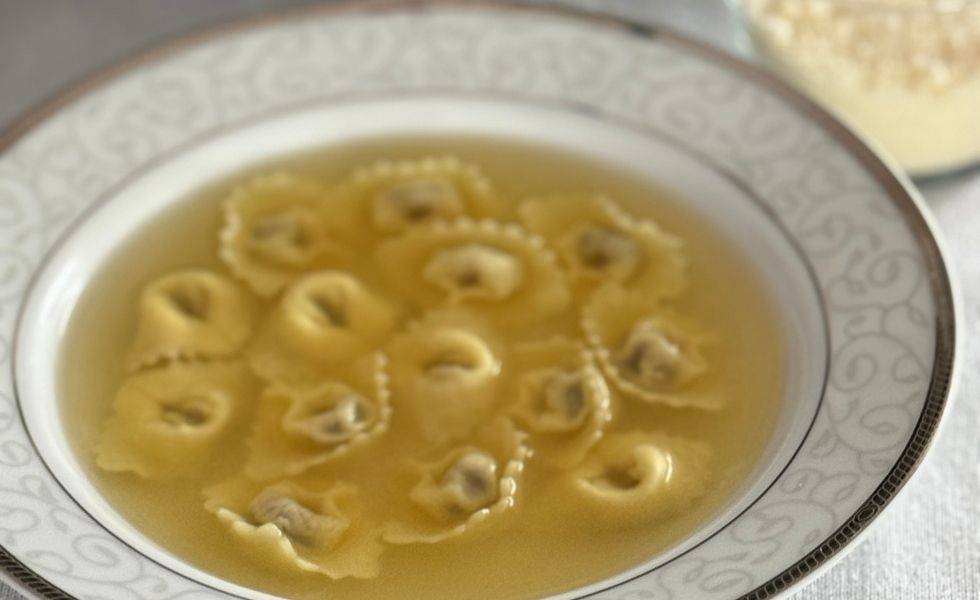
See below for recipe
Tortellini in capon broth is a traditional dish served on Christmas Day in many areas of Northern Italy, especially in Veneto, Emilia-Romagna and the Marche region. Carefully prepared in the days leading up to Christmas, it brings families together and reflects a cuisine rooted in tradition, patience, and simple, high-quality ingredients. The rich, fragrant capon broth perfectly enhances the delicate tortellini, making this dish a true symbol of the holiday season.
For more recipes, visit www.worldchefs.org/news.
| Cookie | Duration | Description |
|---|---|---|
| cookielawinfo-checkbox-analytics | 11 months | This cookie is set by GDPR Cookie Consent plugin. The cookie is used to store the user consent for the cookies in the category "Analytics". |
| cookielawinfo-checkbox-functional | 11 months | The cookie is set by GDPR cookie consent to record the user consent for the cookies in the category "Functional". |
| cookielawinfo-checkbox-necessary | 11 months | This cookie is set by GDPR Cookie Consent plugin. The cookies is used to store the user consent for the cookies in the category "Necessary". |
| cookielawinfo-checkbox-others | 11 months | This cookie is set by GDPR Cookie Consent plugin. The cookie is used to store the user consent for the cookies in the category "Other. |
| cookielawinfo-checkbox-performance | 11 months | This cookie is set by GDPR Cookie Consent plugin. The cookie is used to store the user consent for the cookies in the category "Performance". |
| viewed_cookie_policy | 11 months | The cookie is set by the GDPR Cookie Consent plugin and is used to store whether or not user has consented to the use of cookies. It does not store any personal data. |